Constant Elasticity Of Substitution Demand Function slidesharetrick

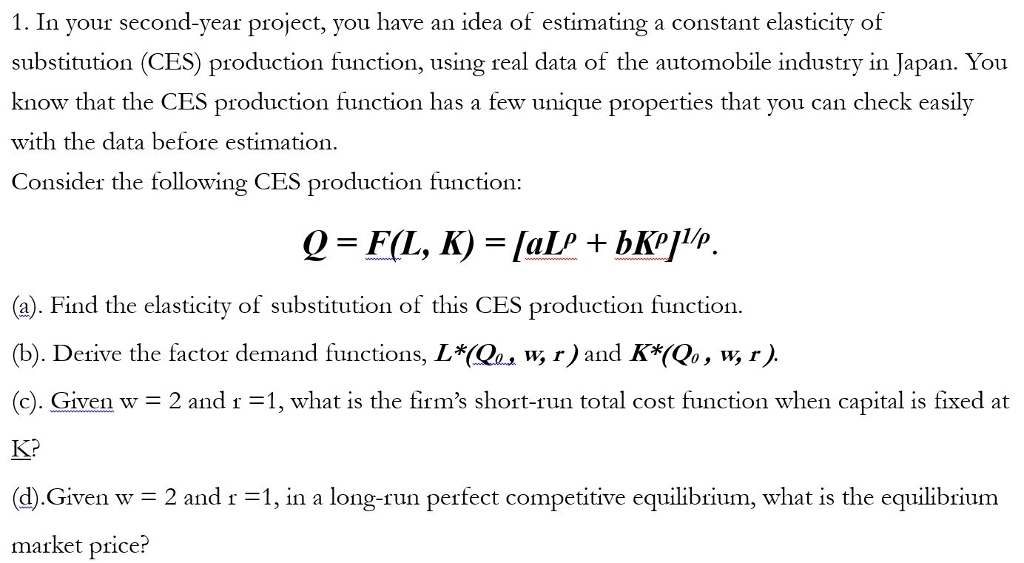
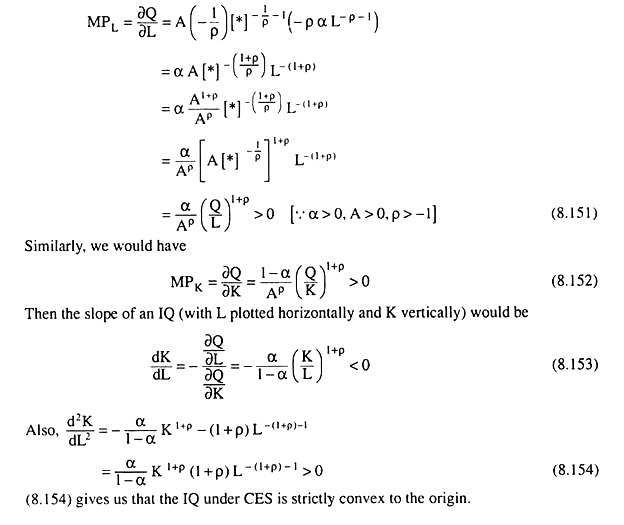
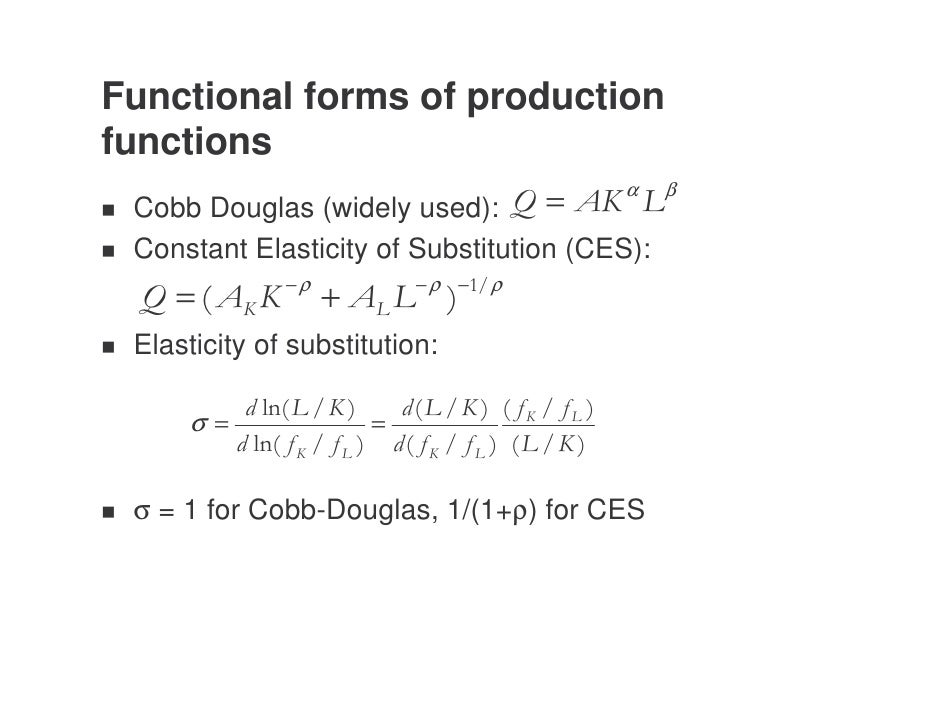
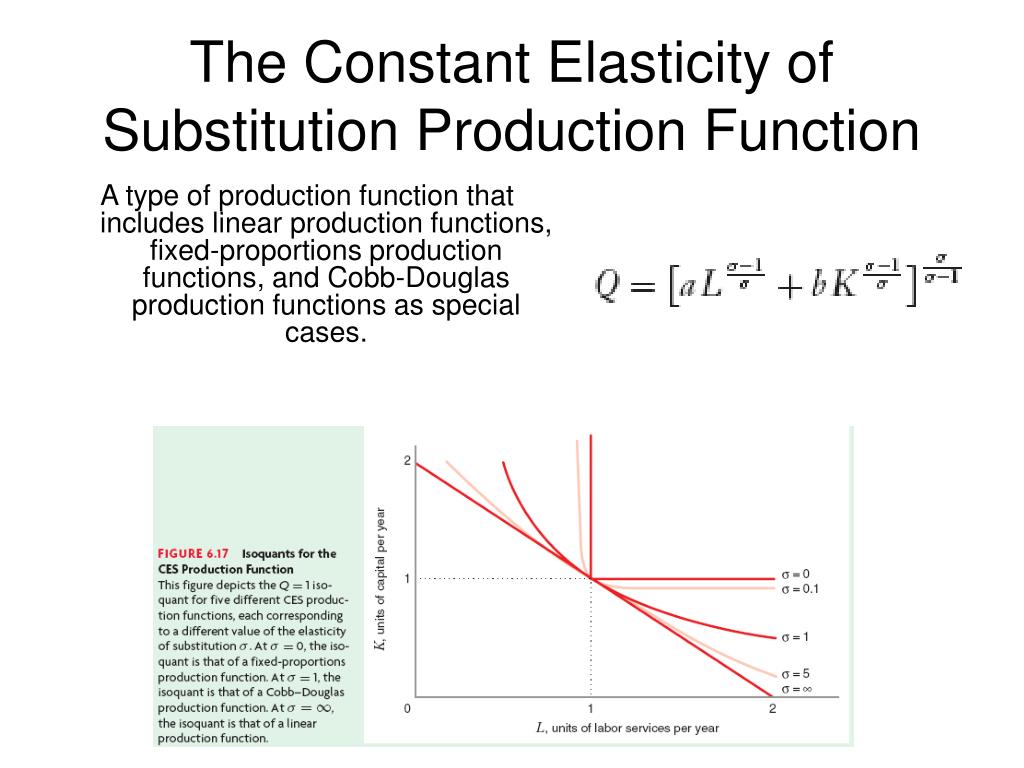
A constant-elasticity-of-substitution production function in which the elasticity of substitution exceeds unity can be endogenously derived as the envelope of Cobb-Douglas production functions when the efficiency of inputs is assumed in a specific form. The difficulty of mechanization represents the elasticity of substitution.. The constant elasticity of substitution, or CES production function, is used as a means for illustrating how the shape of isoquants change as the input mix changes. Examples of research using a translog production function to estimate elasticities of substitution for agricultural inputs are cited. Key terms and definitions: Isoquant Pattern
What Is Elasticity Of Substitution In CobbDouglas Production Function? Strategy Magnate
Constant Elasticity Of Substitution Demand Function slidesharetrick

Constant Elasticity Of Substitution Demand Function slidesharetrick
Constant Elasticity Of Substitution Utility Function slidesharetrick
Constant Elasticity Of Substitution Demand Function slidesharetrick
The CES Production of a Firm (With Equation)
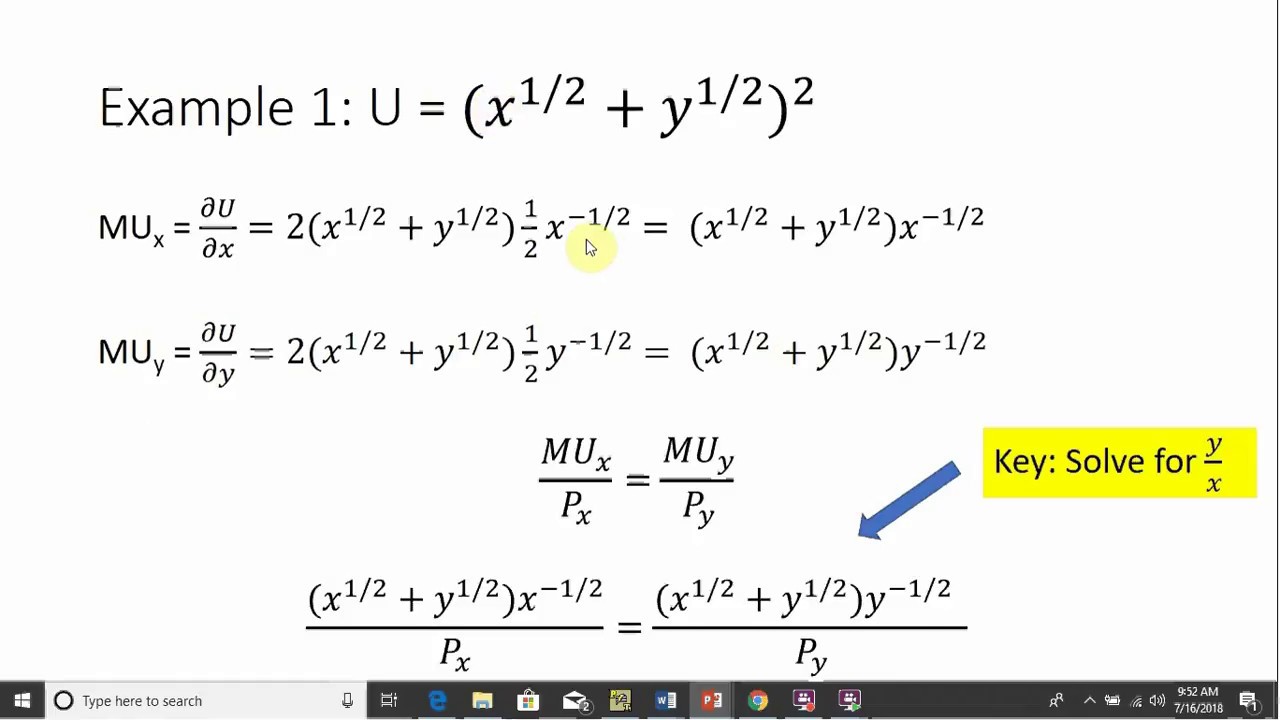
Constant Elasticity Of Substitution Utility Function slidesharetrick

How to Calculate the Elasticity of Substitution from Production Function YouTube

Marginal Rate of Substitution (MRS) of Constant Elasticity of Substitution (CES) Utility
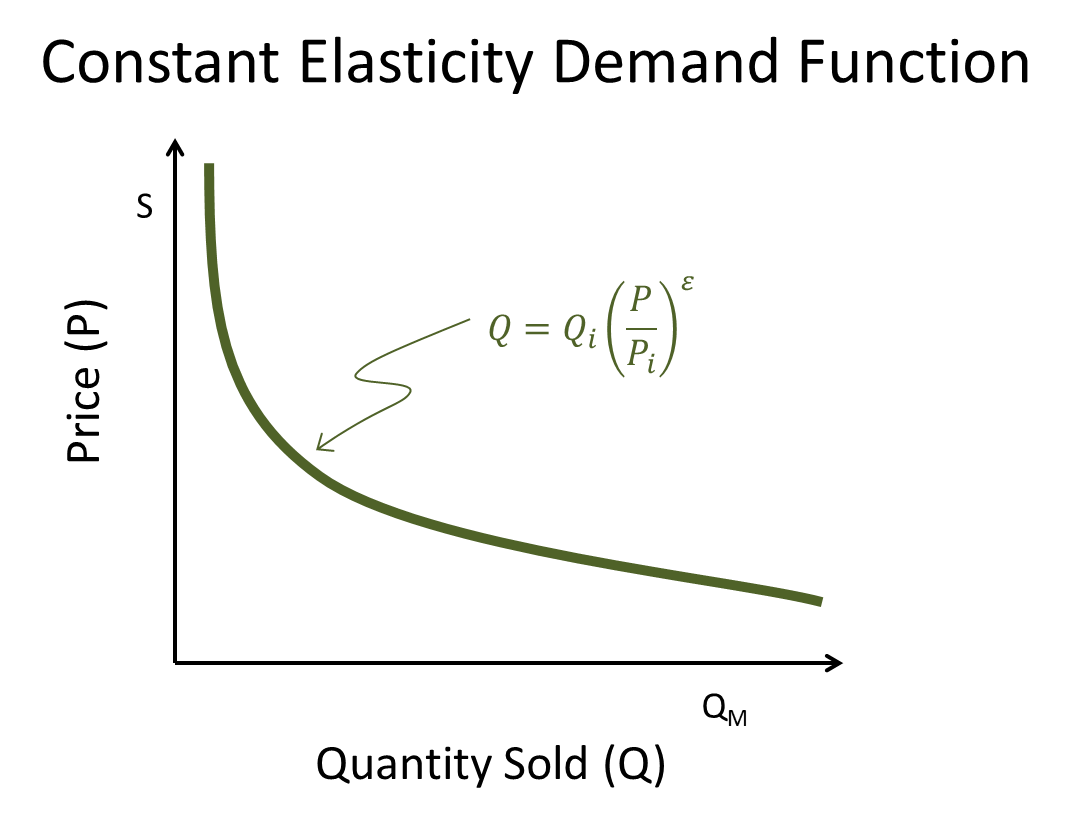
Constant_Elasticity_Demand_Function The Wiglaf Journal
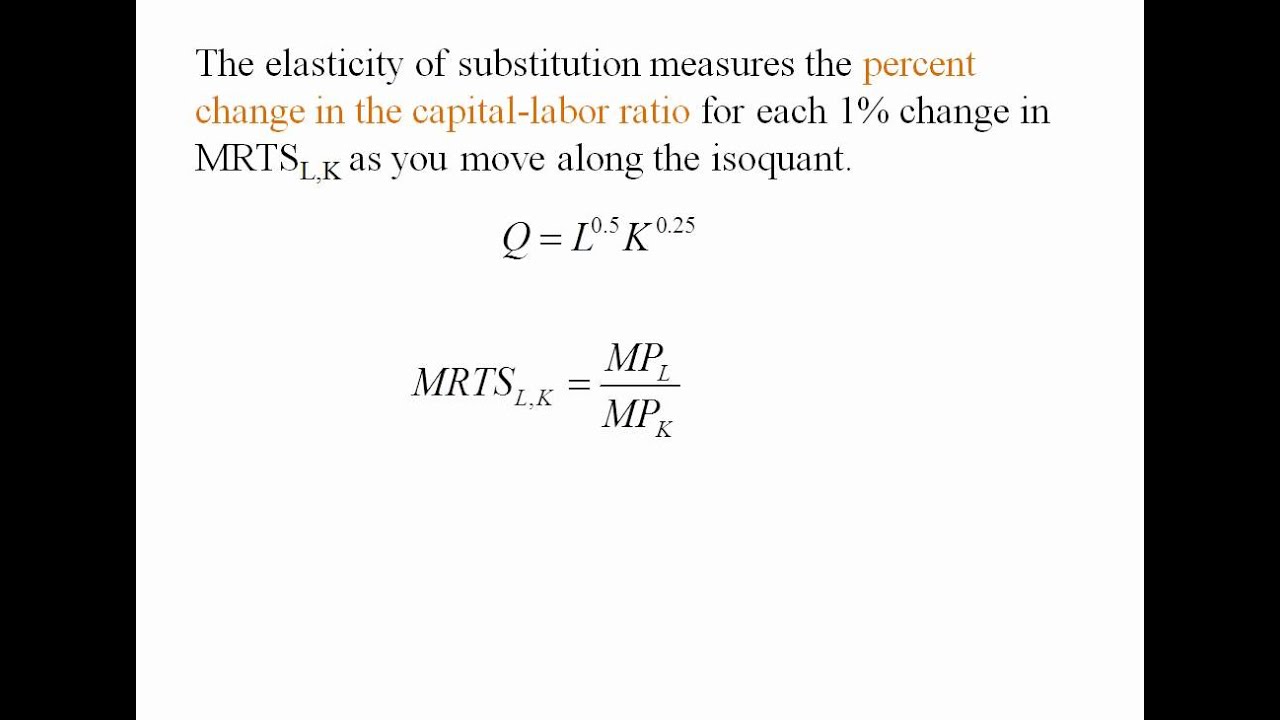
Constant Elasticity Of Substitution Demand Function slidesharetrick
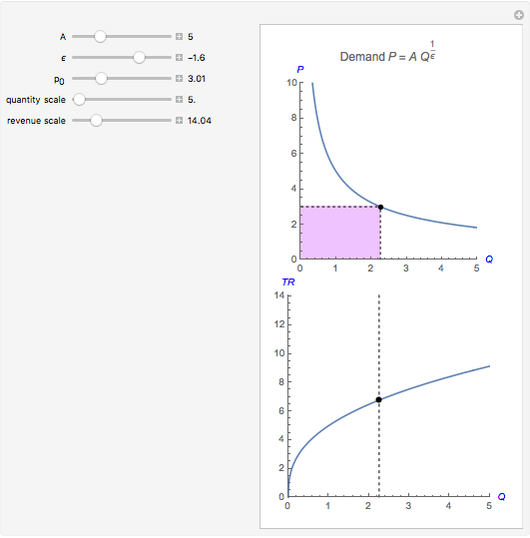
Constant Elasticity Of Substitution Demand Function slidesharetrick
Constant Elasticity Of Substitution Utility Function slidesharetrick
Constant Elasticity Of Substitution Utility Function slidesharetrick

w19. ConstantElasticityofSubstitution Matching Function YouTube
PPT 5.3 Consumer Surplus PowerPoint Presentation, free download ID6244818

CobbDouglas Elasticity of Substitution YouTube
Answered What is the elasticity of substitution,… bartleby
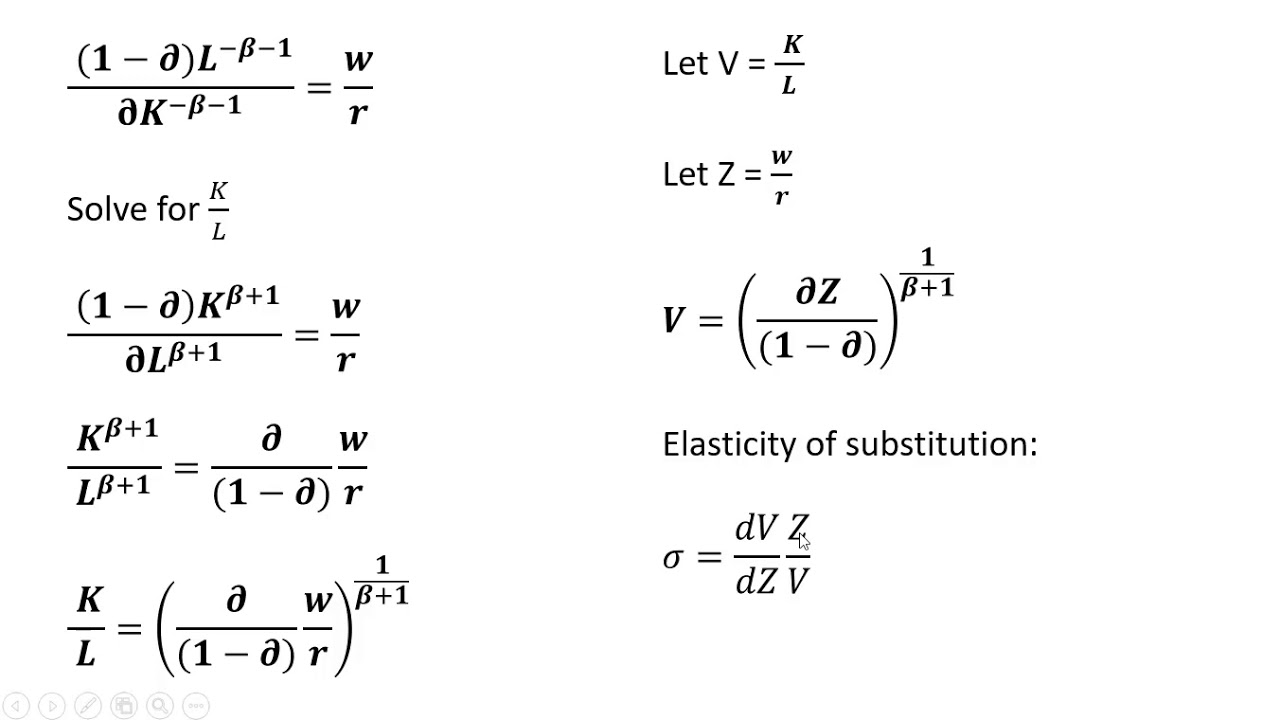
General Solution CES Elasticity of Substitution YouTube

Solved A Symmetric Constant Elasticity Of Substitution (C…
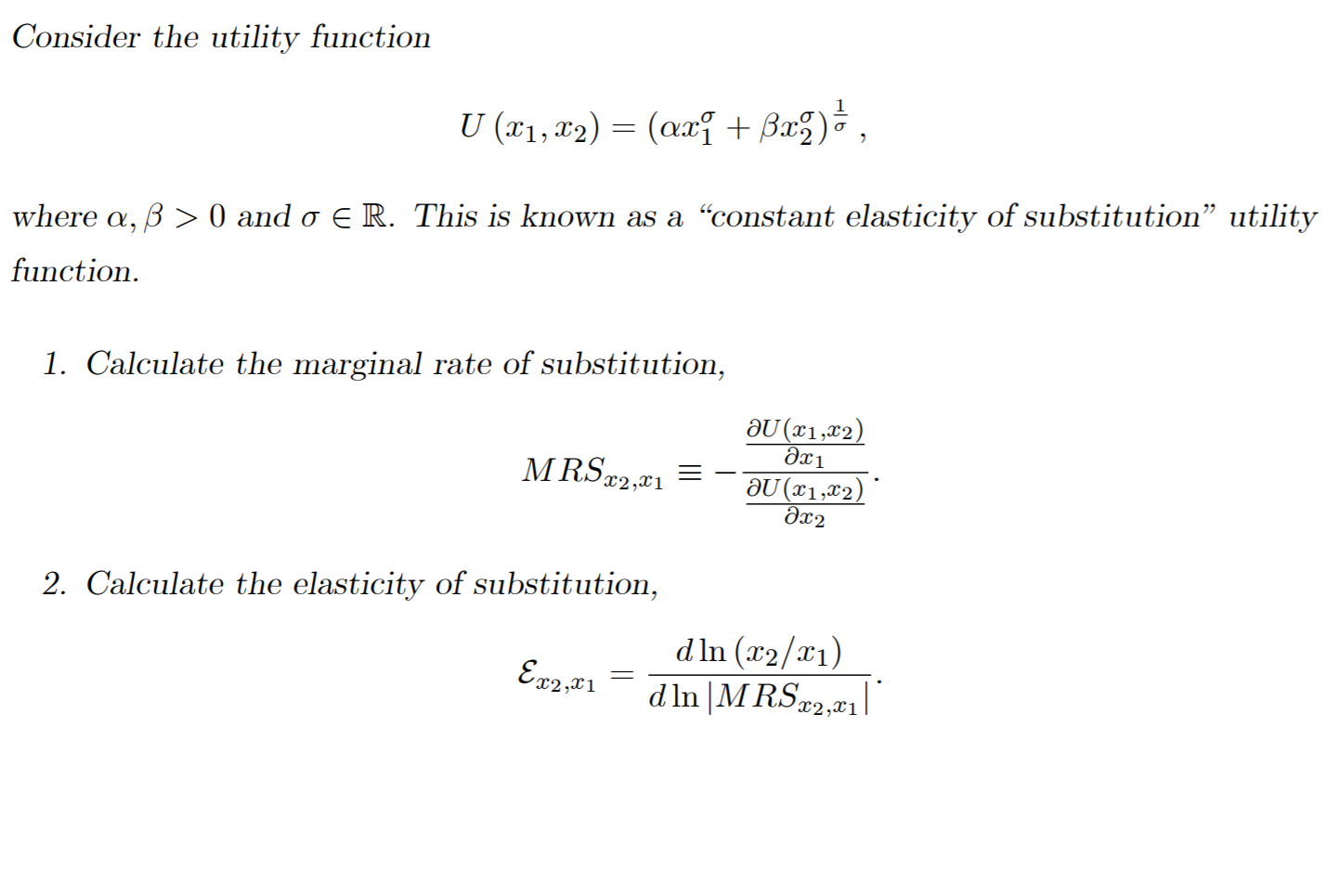
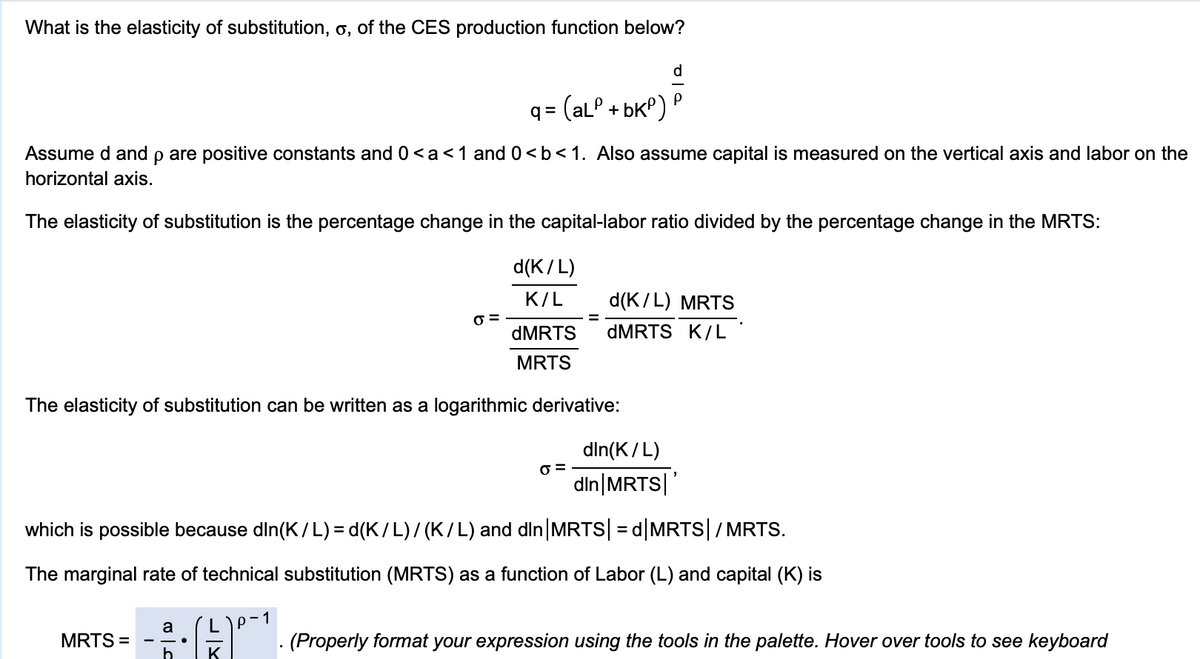
The Constant Elasticity of Substitution (CES) refers to a class of production, utility, or cost functions that describe the rate of substitutability between two or more inputs (factors of production) or goods while maintaining a constant rate of substitution. This constant rate of substitution is quantified by the elasticity of substitution.. 4.12 The CES Utility Function. A more general way of modeling substitutability is via a constant elasticity of substitution (CES) utility function, which may be written \(u(x_1,x_2) = \left(\alpha x_1^r + (1 – \alpha)x_2^r\right)^{1 \over r}\) A little math shows that the MRS of this utility function is \(MRS = {\alpha \over 1 – \alpha} \left( {x_2 \over x_1}\right)^{1 – r}\) There are two.